How GPS Fleet Tracking Transforms Senior Meal Delivery
The Visibility Problem
Most senior meal delivery operations suffer from a fundamental visibility gap: once a driver leaves the kitchen, administrators have no idea where they are, how many deliveries they have completed, or when they will return.
This lack of visibility creates cascading problems. When a family calls to ask where their parent's meal is, the office cannot provide an answer. When a driver runs late, there is no way to proactively notify affected residents. When routes are inefficient, there is no data to prove it.
What GPS Fleet Tracking Provides
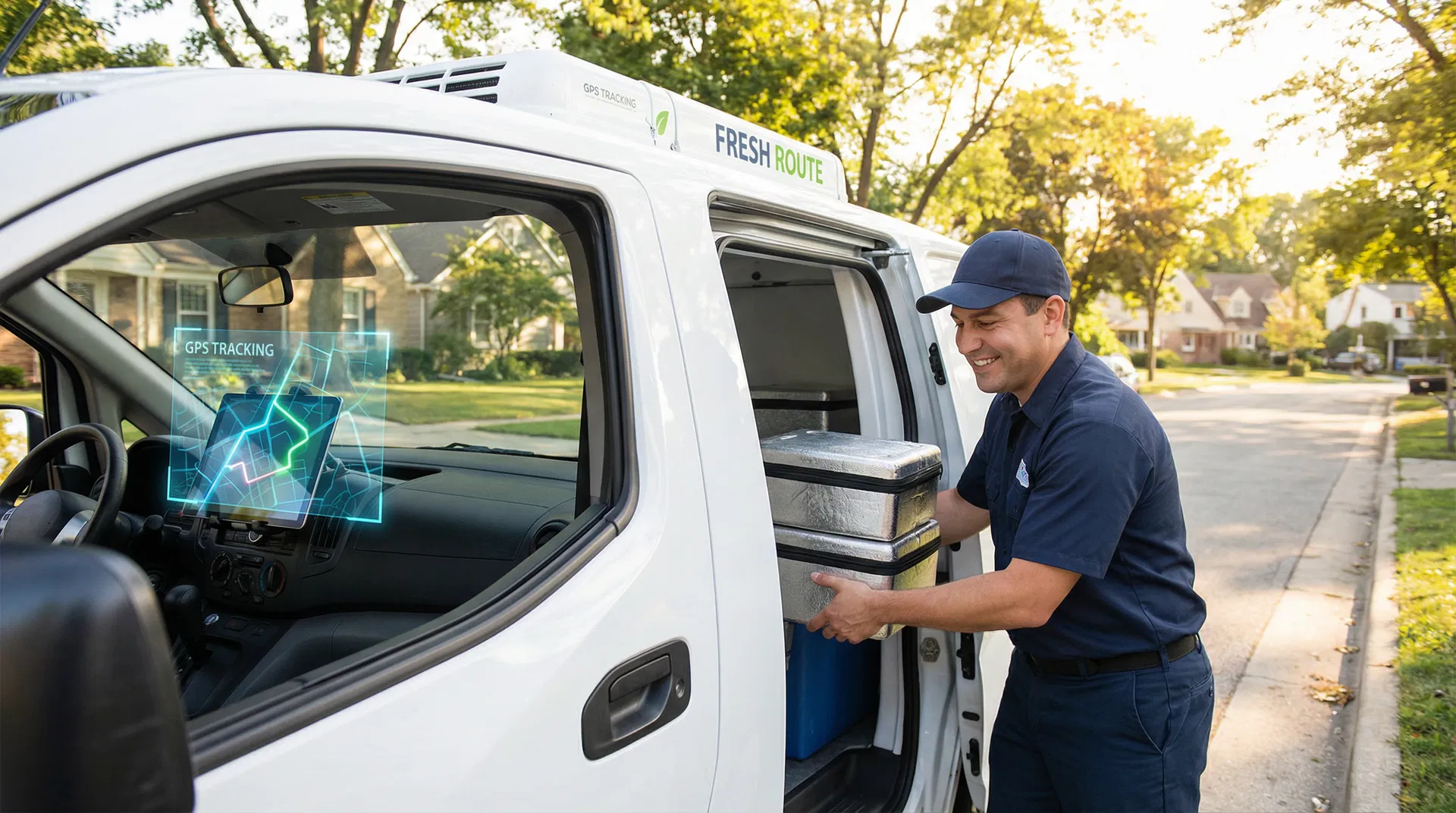
Modern GPS fleet tracking systems provide real-time location data for every vehicle in your fleet, combined with delivery status updates, route adherence monitoring, and historical analytics.
Real-Time Vehicle Location
Know exactly where every driver is at all times. A live map view shows all vehicles simultaneously, with color-coded status indicators showing whether each driver is en route, at a delivery stop, or returning to base.
Geofenced Delivery Confirmation
When a driver enters a predefined geofence around a delivery location, the system automatically logs the arrival. Combined with photo proof of delivery, this creates an indisputable record of when and where each meal was delivered.
Route Adherence Monitoring
Compare planned routes against actual routes driven. Identify drivers who deviate from optimized paths, take unauthorized stops, or spend excessive time at delivery locations.
Historical Analytics
Over time, GPS data reveals patterns that inform better operational decisions:
- Which routes consistently run over time
- Which delivery locations have access issues that slow drivers
- Seasonal traffic patterns that affect delivery windows
- Driver performance comparisons across the fleet
ROI of GPS Fleet Tracking
Organizations that implement GPS fleet tracking typically see:
| Metric | Improvement |
|---|---|
| Fuel costs | 15-25% reduction |
| On-time delivery rate | 30-40% improvement |
| Customer complaints | 50-60% reduction |
| Route efficiency | 20-35% improvement |
| Driver accountability | Measurably improved |
Implementation Considerations
GPS fleet tracking requires minimal hardware — most modern systems use smartphone-based tracking through a driver app, eliminating the need for expensive vehicle-mounted devices.
The key to successful implementation is driver buy-in. Frame the technology as a tool that helps drivers do their jobs more efficiently, not as a surveillance system.
Getting Started
Okto includes built-in GPS fleet tracking with real-time maps, geofenced delivery confirmation, and comprehensive route analytics. Request a free demo [blocked] to see it in action.